
The Way of Professional Branding
Branding as signal and strategy for a world not yet created.
Read this later - send a copy to yourself and receive weekly essays on Sunday mornings
One essay every Sunday morning. Unsubscribe anytime.
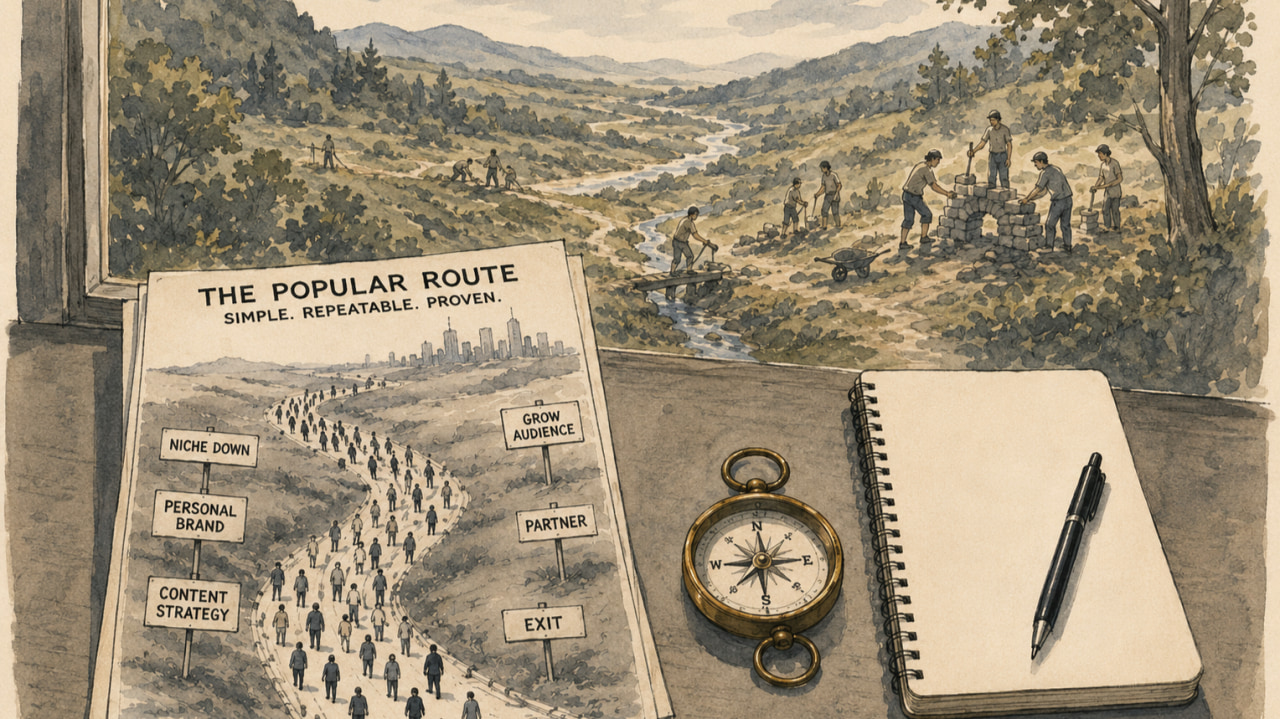
What it’s been like trying to define a professional brand in an AI-drenched world with an uncertain future.
I’ve been writing on LinkedIn since 2024 - but looking back, I can’t tell heads from tails what it was that I was writing about. Like most people I post on LI cause everyone says so. There wasn’t a plan about what I was writing about or why other than getting into the habit of it. I knew I needed a cohesive voice, something to tie it all together - a Brand, if you will.
It’s already mid-July of 2026 - and I think I spent most of this year just figuring out what kind of brand I wanted to own.
I wanted to work with others who share the same values and sense of mission - not be another mercenary.
I didn’t want to be another cookie cutter professional online selling expertise, career advice, or how AI can make you more productive. Despite how useful I find that kind of content, I find it cringey to create it myself. I knew I couldn’t sustain that. Building a brand is a multi year effort - perhaps even a lifetime journey.
There’s been a part of me that’s been needing expression for years now, ever since I saw both the promise and the risks of AI and what it can mean for society and our lives. I didn’t want to ignore its call.
But wow, did it make it harder to define a Brand. There’s no clear precedent for the kind of framing I was looking for.
Most brands do something like this: Use your industry or profession, a specific topic as a thought leader, associate with big Brands or your own company, occupy a specific problem or niche market.
I’ve had a diverse career - journalism, education, Anthropology, product, tech, MBA - there’s no industry or professional niche I occupy. While I gained a lot of experience from past positions, I don’t want the next step of my career to be defined by my past employers.
I also have quite a range of projects and creative outlets - building software with AI, writing essays and fiction - but these are simply output modes, not framing for a Brand. You can find anything under the sun under the category of writing and software, which makes it unmemorable.
For branding to work, you want to have people associate you to something, and stick with it. Over time, as people reinforce that neural connection between you and The Thing You are Known For - you get branding. Repeated exposure over time is key, like repetition learning.
Which is why it’s been so hard. To make branding work, you have to stick with it, show up regularly, and persist long enough for it to land. Yet all of the default frames for branding would have required me to pick a lane and amputate a part of my work that felt crucial.
Branding also comes in a lot of flavors - the strategies and framing you’d use to maximize follower count aren’t the same as someone who’s more interested in creating an authentic, values aligned personal brand. The kind of story you’d tell as a professional service consultant isn’t the same as someone trying to attract like-minded peers.
About the only thing that is consistent is… well, the need for consistency and time. Which meant that if I was to define a Brand, it had to be one I’d actually want to show up for regularly and which can sustain me for a very long time.
What complicates all of this is the universal basic need for income, whether through full-time employment or contractual work. There’s no end to the advice, courses, and experts online who can teach you how to navigate the job hunt or find your first client. None of them felt right to me.
I wanted to work with others who share the same values and sense of mission - not be another mercenary. It’s a critical time right now, and anything else would feel as though we’re blindly sticking our heads in the sand while AI accelerates everything.
As we make decisions on how to guide AI, what tradeoffs we’re willing to live with, what systems to build - all of that will be guided by our values and beliefs. Those distill into a Brand and represent what you stand for.
So it didn’t surprise me to find others who felt the same way, and are finding it difficult to define themselves. Who continuously reject the temptation to ‘do what already works’ and secure envious jobs at top AI companies like their peers. Each one of us is doing the much harder, ambiguous work of defining what hasn’t already got a name, and refusing to settle before we find it.
But I also believe this is the best way to future proof our careers and be successful in the long run.
There’s already plenty of professional boilerplate brands - but there’s not a lot of ones with a unique point of view or sense of mission. Brands that leave you feeling something. The thing that actually makes something memorable.
AI has made it easier for anyone to create professional AI slop - only for people to start rejecting it in favor of what still feels genuine and human. I think that’s still going to matter, if not more so, as our future continues to probe us with questions about what kind of world we want to build and who we want to be.
As we make decisions on how to guide AI, what tradeoffs we’re willing to live with, what systems to build - all of that will be guided by our values and beliefs. Those distill into a Brand and represent what you stand for.
So after all that - what is my Brand?
I call it Human Inference - uncovering hidden harmful beliefs before AI automates everything.
Because every product, company, and institution runs on beliefs and narratives - they define how we build products, what policies we create, what kind of society we build.
When we don’t uncover these beliefs and challenge their assumptions, we get stuck in the way things already are instead of imagining what’s possible. We replicate harms thinking they’re necessary evils, or get stuck doing things by the book instead of redefining what the process should even be.
I’ve found my best work happens when I’m brought into situations that need a new perspective - turning around failing programs, kickstarting a new greenfield project, or reinventing systems with AI.
But this becomes even more critical for defining the kind of world we want to build and the society we want to live in. AI could be our opportunity to build what has yet to come.
Or it can create more of the same, just faster, with all of its ills.
Maybe we won’t be able to fix everything. Maybe it’s already too late. But now that we have this amazing technology, it’d be a shame not to try.
I write to challenge the narratives which shape our beliefs, study history to understand the actions we take to make social change possible, and build tools to make those actions easier. If you’d like to support my work, please visit https://humaninference.ai/build for more information.